Why Buttery Soft Leggings Pill Between the Thighs First - and How to Slow It Down
Quick Answer: Pilling happens where friction is highest, which is the inner thigh for almost everyone. Buttery soft fabrics pill more readily because the softness comes from brushed, loosely bound surface fibres - the same fibres that lift, tangle, and ball up under rubbing. You cannot prevent it entirely, but washing cold and inside out, skipping fabric softener, avoiding the dryer, and pairing with smoother-seamed layers slows it substantially.
The frustrating part is that the fabric doing the pilling is the fabric you bought them for.

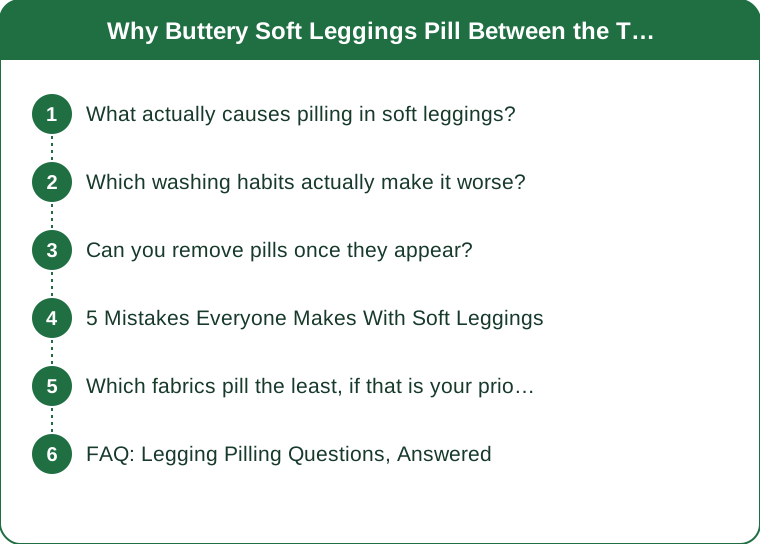
What actually causes pilling in soft leggings?
Three things happening at once, and only one of them is your fault.
Loose surface fibres. Buttery soft fabric is usually a brushed or peached polyester or nylon blend. Brushing mechanically raises short fibre ends to the surface, which is what creates the hand feel. Those raised ends are, by definition, not tightly bound into the yarn - so they are available to tangle.
Friction. Fibre ends rub against each other, twist together, and form a small ball. The ball stays attached because a strong synthetic fibre anchors it. This is why polyester pills more visibly than cotton: cotton pills too, but its weaker fibres snap and the pill falls away, while polyester pills hang on.
Abrasion points. Inner thighs first, then the seat, then anywhere a bag strap, a car seat, or a gym bench makes contact. The inner thigh is not a manufacturing weak point - it is simply where two moving surfaces touch on almost every step.
Why premium fabric does not solve it. A higher-quality buttery soft fabric usually has better fibre binding and a tighter knit under the brushed face, so it pills more slowly. It does not pill less because of price - it pills less because of construction. Anything sold on softness has made a tradeoff against abrasion resistance somewhere.
One useful reframe: pilling and softness sit on the same axis. A legging that never pills is usually a compression fabric with a smooth, tightly bound face - and it will not feel buttery.
Which washing habits actually make it worse?
Four of them, and they are the four most common laundry defaults.
Fabric softener. The biggest single mistake with performance synthetics. Softener works by coating fibres with a waxy film, which loosens the fibre binding at the surface and traps residue that attracts more friction. It also degrades moisture wicking. Skip it entirely on activewear.
Hot water. Heat relaxes elastane and swells synthetic fibres, loosening the brushed face. Cold wash, always - 30C or below, and cold is better.
The tumble dryer. The worst offender by a wide margin. Heat plus constant abrasion against other garments is the exact combination that raises and tangles fibre ends. Air drying alone will visibly extend the life of a soft legging.
Washing with towels, denim, or anything with hardware. Towels shed lint that embeds in the brushed face. Denim and zips are abrasive. Wash activewear with activewear, or in a mesh bag.
What actually helps, in order of impact:
- Turn them inside out - the brushed face is then protected from the drum and from other garments
- Cold water, gentle cycle
- No fabric softener, and a smaller dose of detergent than you think
- Air dry flat or on a rail, out of direct sun
- Mesh laundry bag for anything already showing wear
A note on detergent quantity: excess detergent does not rinse out fully from synthetic knits, and the residue stiffens the fabric and increases surface friction. Half the recommended dose is usually plenty for a light activewear load.
Can you remove pills once they appear?
Yes, and doing it properly is genuinely satisfying. Doing it badly puts a hole in your leggings.
A battery fabric shaver is the right tool. It cuts the pill above the fabric surface without pulling the anchoring fibre. Lay the garment flat on a hard surface, keep the fabric taut but not stretched, and work in short passes with light pressure. Do not shave the fabric while you are wearing it - the fabric curves, the blade catches, and the result is a hole in the exact spot that already gets the most stress.
A pumice-style sweater stone works on knitwear and is too aggressive for stretch synthetics. Avoid it here.
A disposable razor is the classic improvisation and the classic way to ruin a pair. It cuts too deep and the blade angle is wrong for stretch fabric. If it is genuinely all you have, use a fresh blade, keep the fabric flat and taut, and accept the risk.
Small scissors are slow but the safest option for a handful of pills - snip the ball itself, not the fabric under it.
What to expect afterwards. The fabric will feel slightly less soft where you have shaved, because you have removed exactly the raised fibres that created that feel. The area will also pill again, faster, because the surface has been disturbed. Shaving is maintenance, not a cure - and it is worth doing when the pilling is visible rather than waiting until the whole inner thigh is fuzzy.
When to stop bothering: once the fabric has thinned enough to be slightly translucent at the inner thigh, pilling is no longer the issue. That is abrasion wear, and the garment is near the end of its useful life as gym wear. It has a second career as loungewear.

5 Mistakes Everyone Makes With Soft Leggings
1. Using fabric softener because they feel less soft. This is the loop that ruins them fastest - the fabric feels stiffer from detergent residue, softener gets added to fix it, and the softener accelerates the pilling. Strip the residue with a wash on hot vinegar-free rinse instead and go back to a light detergent dose.
2. Tumble drying on low because low feels safe. Low heat is still heat, and the abrasion from tumbling matters as much as the temperature. Air drying takes a few hours and adds months.
3. Wearing them for the wrong activity. Buttery soft fabric is built for yoga, walking, lounging, and travel. Cycling, rowing, and anything with a seat and repeated sliding will pill them in weeks regardless of care. Keep a smoother compression pair for those.
4. Buying light colours and expecting pills to be invisible. Pills catch light and shadow, so they show on light fabrics as texture and on dark fabrics as a lighter fuzz. Heathered and marled fabrics genuinely hide pilling best, which is the least-known fact in this whole subject.
5. Storing them folded under a stack. Compression against seams and hardware from other garments creates exactly the low-level abrasion that starts pills. Roll them, or keep them in their own drawer section.
Which fabrics pill the least, if that is your priority?
There is a real tradeoff, and it is worth choosing deliberately.
Least likely to pill:
- Tightly knit nylon-elastane compression fabrics. Smooth face, tightly bound fibres, high abrasion resistance. Cool feeling rather than cosy, and noticeably more supportive
- Ribbed knits with a tight structure, which distribute friction across the rib rather than a single flat plane
- Higher nylon content generally. Nylon has better abrasion resistance than polyester at a similar knit density
Most likely to pill:
- Brushed polyester fleece-backed fabrics, which are the softest and the most fragile at the surface
- Anything described as peached, brushed, velvet, or cloud-like
- Cotton-blend leggings, which pill readily though the pills shed rather than cling
- Loosely knit fabrics of any fibre, where there is more room for fibres to move
The honest recommendation for a mixed drawer: own both. A buttery soft pair for low-friction activity and everyday wear, and a smooth compression pair for anything that involves a seat, a machine, or heavy sweat. Trying to make one fabric do both is what produces disappointment in about eight weeks.
On seam placement, which matters more than most people account for: a legging with a flat inner-thigh seam or, better, no inner seam at all has less to abrade. Gusseted crotch panels also reduce the seam intersection that tends to wear first. If you have a pair that has lasted noticeably better than the rest, look at the inner thigh construction - it is usually the reason.
A realistic lifespan. With cold washing, no softener, and air drying, a good buttery soft legging worn once or twice a week will typically look fresh for something in the range of a year, with light inner-thigh pilling appearing well before that. With hot washing and tumble drying, the same pair can look worn in a couple of months.
FAQ: Legging Pilling Questions, Answered
Is pilling a manufacturing defect?
Usually not. It is friction meeting a brushed surface. Pilling within the first few wears, or across areas with no friction, is worth raising with the retailer.
Does washing inside out really help?
Yes, meaningfully. It puts the brushed face against itself rather than against the drum and other garments, which is where most of the abrasion happens.
Will a fabric shaver damage my leggings?
Not if the fabric is flat, taut, and off your body. Shaving while wearing them is the reliable way to cut a hole.
Which colours hide pilling best?
Heathered and marled fabrics, followed by mid-tone colours. Flat black shows the lifted fibres as a grey haze, and light solids show the texture.
TL;DR:
- Pilling is friction plus brushed surface fibres - the same fibres that create the softness
- Inner thighs go first because that is where two moving surfaces touch on every step
- Fabric softener and the tumble dryer are the two habits that accelerate it most
- Wash cold, inside out, in a mesh bag, and air dry - it genuinely adds months
- Use a battery fabric shaver on flat, taut fabric, never while wearing them
If you want a legging that never pills, buy compression. If you want buttery soft, budget for maintenance and enjoy the fabric.
See It in Motion
Seen here: High Waist 8” Yoga Shorts — shop similar styles on bubblelime.com
Keep Reading
This article is for general informational and styling purposes only. Fit, sizing, and product availability may vary.