Why Buttery Soft Leggings Attract Lint and Pet Hair Like Nothing Else You Own
Quick Answer: Brushed buttery-soft fabric has a raised surface with thousands of tiny fibre ends, and those ends mechanically trap lint and hair the way velcro traps loops. Synthetic fibres also hold a static charge, which pulls debris in from a distance. The fixes are to wash them inside out and separately, use a damp rubber glove rather than a lint roller, and stop using fabric softener, which coats the fibres and makes both problems worse.
You have a dog, and you have black buttery-soft leggings, and you have accepted this as a permanent condition.
It is actually two separate problems with three separate fixes, and one of them takes ten seconds.

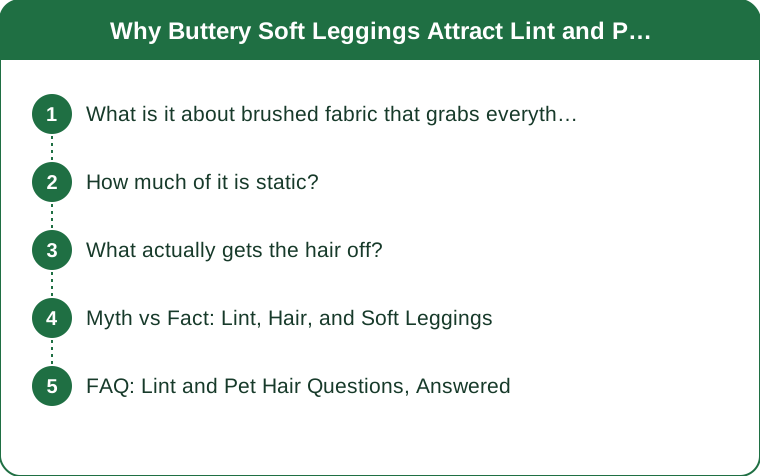
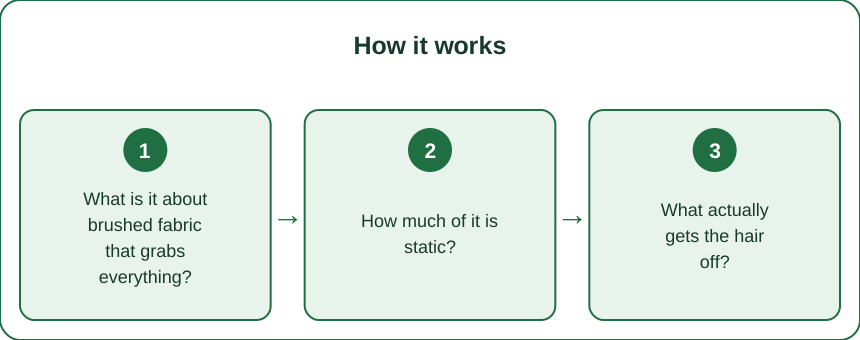
What is it about brushed fabric that grabs everything?
Surface texture, and it is the same thing that makes them feel the way they do.
Buttery-soft fabrics are typically a brushed poly-spandex or nylon-spandex knit. Brushing is a mechanical finishing process where the fabric is passed over rollers with fine wires that raise the fibre ends on one face, creating a soft, slightly fuzzy nap. That nap is the entire selling point — it is what your hand registers as buttery.
It also means the surface is not smooth. Under magnification it is a dense field of raised fibre ends, and every one of those is something a piece of lint or a pet hair can catch on. Cat and dog hair in particular is often slightly barbed or has a scaled cuticle, which means it does not simply rest on the surface — it works its way in and grips.
Compare with a compression legging in a tightly woven or smooth-knit fabric. The surface is flat, there is nothing to catch on, and debris brushes off.
This is not a defect and it is not fixable. The nap is the product. What is fixable is how much debris gets onto them and how easily it comes off.
How much of it is static?
A substantial share, and this is the part most people never address.
Polyester and nylon readily accumulate a static charge, especially in dry air. A charged garment does not just hold onto debris it touches — it attracts debris from nearby, pulling hair off a sofa or lint out of the air.
This is why the problem gets dramatically worse from October onward. Indoor heating drops relative humidity, and below roughly 40 percent, synthetics start behaving very differently. The same leggings that were manageable in a humid August become a magnet in a heated November flat.
Two moments generate most of the charge:
Coming out of the tumble dryer. This is the single largest static event in a garment’s life. Fabric tumbling against fabric in warm, dry air produces a strongly charged item, and it then attracts everything in the vicinity from the moment it comes out.
Friction during wear. Walking, sitting on upholstery, and layering all generate charge continuously.
The fixes for the static half:
- Do not tumble dry to bone dry. Pull them out slightly damp and hang for the last stretch. This is the highest-return change here and it also extends the life of the elastane.
- Wool dryer balls instead of dryer sheets. Dryer sheets reduce static by coating fibres, which is a bad trade on brushed fabric — see below.
- Raise the humidity where they are stored and where you get dressed. Same fix as for static cling generally.
- A light mist of anti-static spray on the inside before wearing, if it is a specific problem day.

What actually gets the hair off?
Not a lint roller, most of the time. The adhesive lifts what is sitting on the surface and leaves what is embedded in the nap, which is the part that bothers you.
In order of effectiveness on brushed fabric:
1. A slightly damp rubber glove. Put on a washing-up glove, dampen it, and run your hand firmly over the fabric in one direction. The rubber grips embedded hair and the moisture kills the static that is holding it. This is genuinely the best method, it costs almost nothing, and it works when a lint roller has already failed.
2. A rubber pet-hair brush or a damp sponge. Same principle, purpose-made.
3. A dryer session with no heat and a damp cloth. Fifteen minutes on air-fluff with a slightly damp cloth in the drum. The tumbling and the moisture release the hair into the lint filter. Effective on multiple items at once.
4. A fabric shaver, for lint balls rather than hair. Removes pills without damaging the nap if used gently.
5. A lint roller. Fine for a quick surface pass before you leave the house. Not the answer for embedded hair.
What to avoid: sticky tape wrapped around a hand, which pulls at the raised fibres and damages the nap over time, and any stiff-bristled brush, which does the same. The nap is delicate and abrading it is how buttery-soft leggings stop being buttery-soft.
Myth vs Fact: Lint, Hair, and Soft Leggings
Myth: Fabric softener will stop it. Fact: Fabric softener reduces static in the short term and coats the fibres in a waxy residue. On brushed synthetics that residue mats the nap, traps debris and odour, and reduces the fabric’s ability to wick. It makes the leggings feel worse within a few washes and it is the single most common care mistake with this fabric.
Myth: Washing them more often keeps them clean of hair. Fact: Washing them with other things is how most lint gets on them in the first place. A towel or a fleece in the same load sheds enormously, and the leggings collect it in the drum. Wash them inside out, with similar synthetics, and never with towels.
Myth: Dark colours attract more. Fact: Dark colours show more. The attraction is identical; light-coloured leggings are covered in dark hair too and you cannot see it. This matters if you are choosing between colours — it is a visibility decision, not a physics one.
Myth: A high-quality legging will not do this. Fact: The nap causes it, and better leggings often have a denser, more luxurious nap. Price does not predict it; surface finish does. If lint is a dealbreaker, the answer is a smooth-faced fabric, not a more expensive brushed one.
Myth: Once they are hairy, they are ruined. Fact: Almost never. The damp glove method recovers leggings that look hopeless, and a no-heat dryer cycle handles a whole drawer. What genuinely ruins them is abrasive removal methods used repeatedly.
FAQ: Lint and Pet Hair Questions, Answered
How should I wash them to minimise this?
Inside out, cold, on a gentle cycle, with other smooth synthetics only. No towels, no fleece, no new dark cotton. Air dry or tumble on low and remove slightly damp. Inside out matters because it keeps the napped face away from the drum and away from other garments’ shedding.
Does a mesh laundry bag help?
Yes, noticeably. It reduces friction against the drum and other items, which reduces both lint transfer and pilling. It is a very cheap intervention for something that extends the life of the fabric generally.
Why do they seem worse after a few months?
The nap loosens with wear and washing, which means more fibre ends standing proud and more places for debris to catch. It also correlates with the season — most people notice it in autumn, when heating starts and humidity drops. Both are happening at once.
Is there anything to do about it in the car?
Car seats are one of the main sources, particularly fabric upholstery. A washable seat cover, or a towel over the driver’s seat that goes in the wash weekly, removes a surprising share of the problem for anyone who drives daily.
TL;DR:
- The brushed nap that makes them soft is a field of raised fibre ends that mechanically grips hair and lint.
- Static does the rest, and it gets far worse below 40 percent humidity — which is why it starts in October.
- Best removal: a slightly damp rubber glove, not a lint roller. Or fifteen minutes on no-heat with a damp cloth.
- Wash inside out, cold, with similar synthetics only. Never with towels or fleece. Use a mesh bag.
- Stop using fabric softener and dryer sheets — they mat the nap and make everything worse.
- Do not tumble to bone dry. That is the single biggest static event in the garment’s life.
Dark leggings do not attract more. They just show it.
See It in Motion
Seen here: High Waist 8” Yoga Shorts — shop similar styles on bubblelime.com
Keep Reading
This article is for general informational and styling purposes only. Fit, sizing, and product availability may vary.