Why Buttery Soft Leggings Still Smell After Washing - and How to Reset Them
Quick Answer: Buttery soft leggings hold odour because the synthetic fibres that create that hand-feel are oleophilic - they bond with skin oils, and regular detergent is formulated to lift water-soluble soil rather than oil. Bacteria feed on the trapped residue and reactivate the moment you warm up. The reset is a 30-minute soak in a 1:4 white vinegar solution or an oxygen-based sports wash, a cold wash with half the usual detergent, and no fabric softener ever. Expect to repeat the soak monthly, not once.
Here is the specific injustice: they smell fine folded in the drawer. They smell fine when you put them on. Twelve minutes into the warm-up, something turns.
That delay is the whole diagnosis. Nothing on the surface is producing the smell - it is being released.
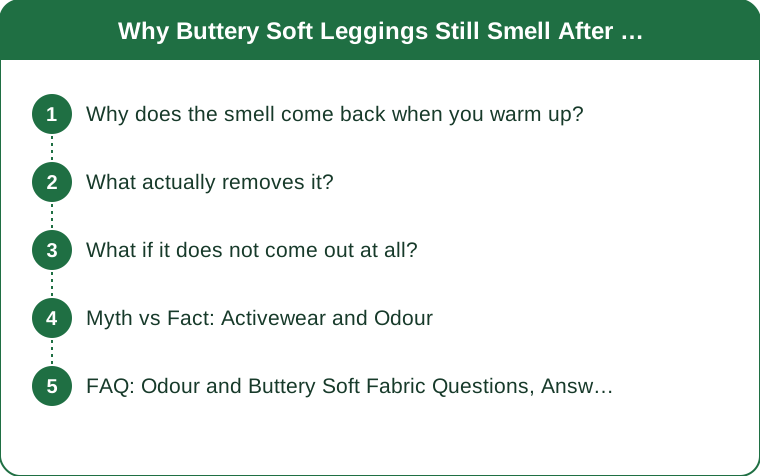
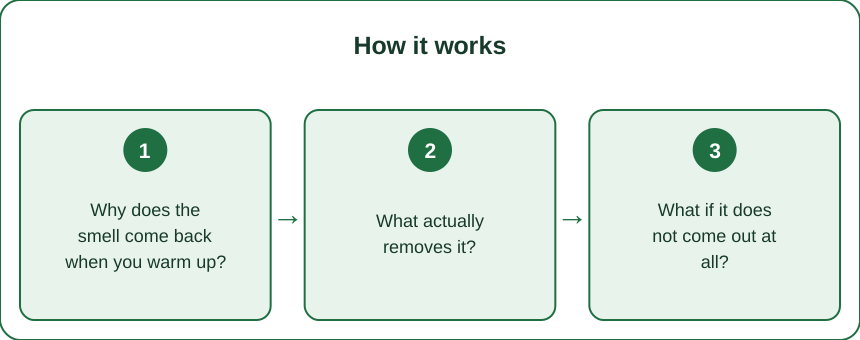
Why does the smell come back when you warm up?
Because the residue was never removed. It was just cold and dry.
Buttery soft fabrics get their feel from very fine polyester or nylon filaments blended with a high proportion of elastane and usually brushed on one face. Two properties of those fibres cause this:
They are oleophilic. Synthetic filaments have an affinity for oil and a resistance to water. Your sebum, along with the residue of body lotion, sunscreen, and deodorant, migrates into the fibre rather than sitting on it.
The surface area is enormous. Brushing splits the filaments to create that peached hand-feel, which multiplies the surface available for residue to cling to. The softer the fabric feels, the more surface it has.
Mainstream detergents are built around surfactants and enzymes that target water-soluble and protein soil. They do a decent job on cotton and a poor job on oil locked inside a synthetic filament.
What is left behind is food. Odour-forming bacteria - largely staphylococci and corynebacteria - metabolise those lipids and produce volatile compounds. Those compounds are not very volatile at room temperature in a dry drawer. Add body heat and moisture and they release all at once.
Hence the twelve-minute delay. You are not smelling dirt. You are smelling a chemistry set that just got switched on.
What actually removes it?
A soak, because the problem is inside the fibre and a wash cycle is too short to get there.
The vinegar reset. Fill a basin with cold water and add white vinegar at roughly one part to four. Submerge the leggings fully and leave them 30 minutes - up to an hour for a bad case. The acetic acid disrupts the bacterial residue and helps break the bond between oil and fibre. Then wash cold as normal. The vinegar smell rinses out completely; if it lingers you did not rinse enough.
Or an oxygen-based sports wash. Products formulated for technical fabrics use different surfactant chemistry aimed at oil, and they work. They cost more than vinegar and they are less messy. Either is fine - do not use both in the same load.
Then change how you wash.
- Cold water, always. Hot water damages elastane and sets protein soil.
- Half the detergent you think you need. This is the counterintuitive one. Excess detergent does not rinse out of dense synthetic knit; it builds up and gives bacteria somewhere to live. More detergent is a common cause of the problem, not a fix.
- Inside out. The face that touched your skin is the face that needs the water.
- No fabric softener. Ever. It works by depositing a waxy cationic film on fibre. On a technical fabric that film seals in exactly what you are trying to remove, kills the moisture-wicking, and permanently degrades the hand-feel.
- Air dry, out of the machine within an hour. Leggings left damp in a drum for six hours will smell worse than before you washed them.
Expect to repeat the soak roughly monthly if you train several times a week. This is maintenance, not a one-off cure.
What if it does not come out at all?
Then you are dealing with what the outdoor world calls permastink, and the honest answer is that it is partly structural.
Once residue has been through enough heat cycles - a hot wash, a tumble dryer, a hot car, a gym bag left in the sun - it polymerises and bonds far more stubbornly to the filament. At that point a soak reduces the smell rather than eliminating it.
Things worth trying before you give up, in order:
A double soak. Vinegar for an hour, rinse, then a separate oxygen soak for an hour. Never mix them.
A strip wash. A hot-water strip is the standard fix for cotton but it will damage elastane, so it is a trade - you may recover the smell at the cost of some stretch and softness. On leggings you were about to bin anyway, it is worth a shot.
Check the machine itself. A front-loader with a mouldy door seal or a detergent-clogged drawer re-deposits odour on everything. If several garments smell, the machine is the suspect, not the leggings.
If all that fails, the useful reframe is that the fabric has reached the end of its functional life. Very soft brushed knits are consumables - the same fine filaments that make them feel good are the ones that pill, thin, and hold residue. Two years of heavy use is a normal life span, and there is nothing you did wrong.
Myth vs Fact: Activewear and Odour
Myth: More detergent gets clothes cleaner. Fact: On dense synthetic knit, excess detergent cannot fully rinse and becomes residue that feeds bacteria. Half a dose plus a soak beats a full dose every time.
Myth: A hot wash kills the bacteria, so it solves it. Fact: Hot water degrades elastane and sets oily soil deeper into the filament. You get a short-term improvement and a faster-aging legging.
Myth: Fabric softener will at least make them smell nice. Fact: It coats the fibre in a film that traps existing residue, stops moisture wicking, and ruins the buttery hand-feel permanently. This is the single most damaging thing you can do to technical fabric.
Myth: Cheap leggings smell and expensive ones do not. Fact: Fibre chemistry does not care about price. Some premium fabrics carry an antimicrobial treatment, which helps for a while - those finishes wear off over dozens of washes and the underlying oleophilic behaviour is identical.
Myth: Sunlight bleaches out the smell. Fact: UV does have a genuine antibacterial effect and airing outdoors helps. It also degrades elastane and fades colour, so keep it to an hour in indirect light rather than an afternoon on a hot line.
FAQ: Odour and Buttery Soft Fabric Questions, Answered
Can I just rinse them in the sink after each workout?
Yes, and it helps a lot. A cold rinse straight after training removes salt and a good deal of surface oil before it migrates into the fibre. It does not replace a proper wash, but it slows the buildup considerably.
Is baking soda as good as vinegar?
It works on a different mechanism - it neutralises acidic odour compounds rather than breaking the oil bond - and it is gentler but less effective on set-in residue. Use it as a maintenance additive, vinegar for the reset. Do not combine them; they cancel each other out.
Why do the leggings smell but my cotton t-shirt does not?
Cotton is hydrophilic and absorbs sweat into a fibre that water can wash back out. Synthetics repel water and attract oil, which is exactly the wrong combination for laundering. It is also why cotton is worse to actually train in.
Does the gym bag matter?
Enormously. Damp leggings sealed in a bag for a few hours at body temperature is close to ideal bacterial culture conditions, and a lot of permanent odour starts there. Get them out within the hour, or carry a mesh bag so they can breathe.
TL;DR:
- The smell comes from skin oil bonded inside the fibre, not dirt on the surface - which is why it releases when you warm up.
- Buttery soft fabrics are oleophilic with huge surface area. The feel and the problem come from the same construction.
- Reset with a 30-minute cold vinegar soak (1:4) or an oxygen-based sports wash, then wash cold.
- Use half the detergent. Excess is a cause, not a cure.
- Never use fabric softener - it seals residue in and permanently kills the hand-feel.
- Get them out of the gym bag within an hour and air dry. Repeat the soak monthly.
If you have been washing them more aggressively each time and getting worse results, that is not bad luck - it is the predictable outcome of using more of the thing that was never going to work. Less detergent and a longer soak is the whole trick.
See It in Motion
Seen here: High Waist Yoga Leggings with Inner Pocket — shop it on bubblelime.com
Keep Reading
This article is for general informational and styling purposes only. Fit, sizing, and product availability may vary.