Why Buttery Soft Leggings Go Sheer When You Sit Down - Not When You Squat
Quick Answer: Sitting stretches leggings across a wider surface and holds them there, while a squat is a brief peak stretch you recover from immediately. Test opacity by sitting cross-legged on the floor for thirty seconds under bright light, not by bending over in a fitting room. Fabric weight below roughly 200 gsm and a high spandex ratio in a thin knit are the usual culprits.
You did the squat test. You bent over in front of the mirror. The leggings passed. Then you sat down on a friend’s sofa in daylight, glanced at your thigh, and understood that the squat test has been lying to you for years.
Why does sitting expose thin fabric more than squatting?
Because the two positions stretch fabric in different ways, and only one of them holds the stretch.
A squat is a peak, not a plateau. You go down, the fabric reaches maximum stretch across the seat and the back of the thigh for a second or two, and you come back up. Even if the knit opens slightly, you are rarely looking at it in good light while it is at maximum stretch.
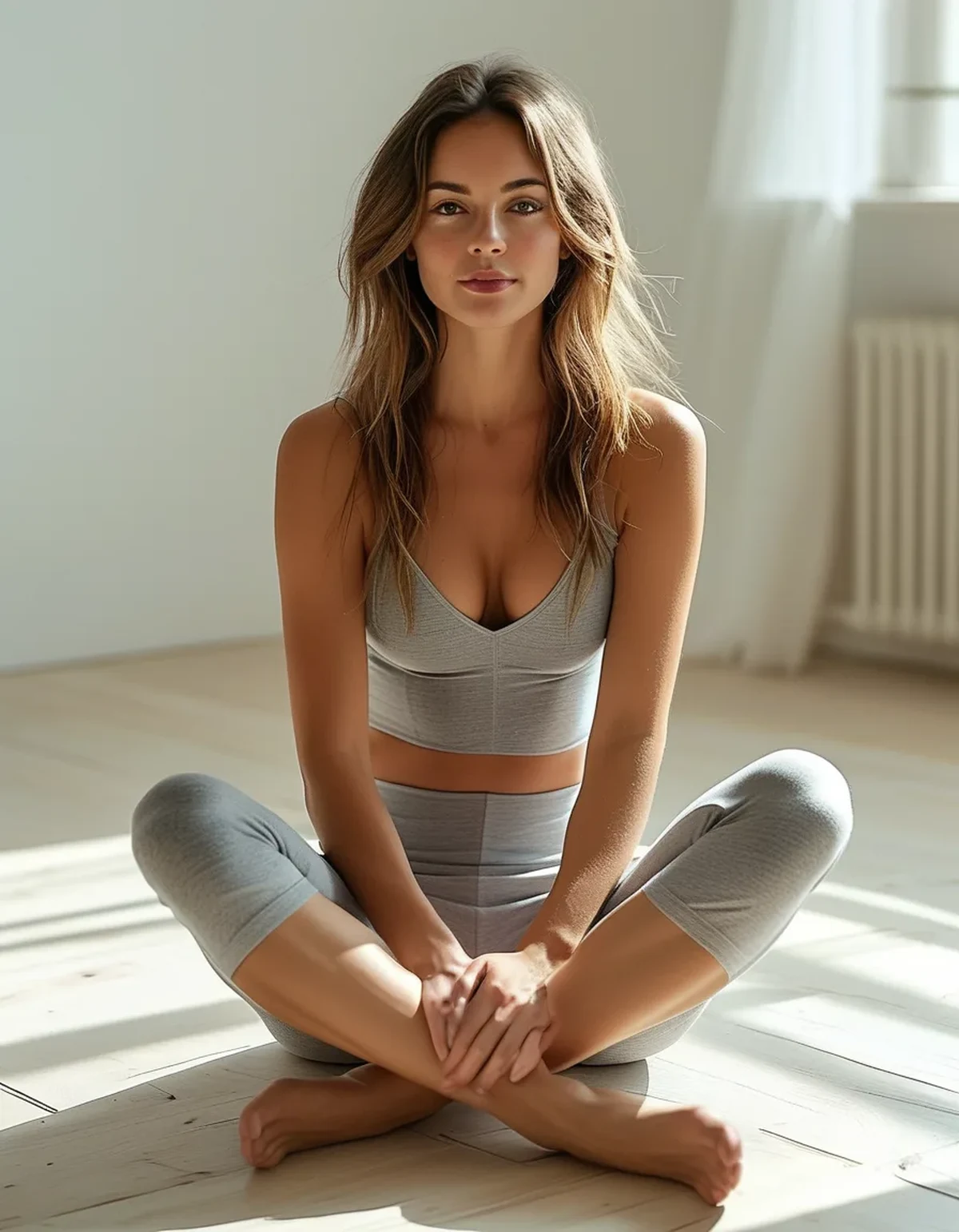
Sitting is sustained multi-directional stretch. When you sit - especially cross-legged, or on a low seat - the fabric across the thigh and seat is pulled taut and stays taut. The knit loops open and stay open. Meanwhile the fabric flattens against your skin, which reduces the tiny air gap that helps thin fabric look opaque, and the skin tone underneath shows through.
Light direction changes too. A fitting room has overhead light and you are usually standing. Sitting outdoors or near a window puts light at an angle across the fabric, which is the exact condition that reveals sheerness.
So the standard test checks the wrong position, at the wrong duration, in the wrong light. Three variables all pointing the same way is why so many people get this wrong - and why leggings that seemed fine somehow fail in public.
What in the fabric actually causes it?
Buttery soft is a hand-feel description, not a construction spec, and the things that make a fabric feel like that often work against opacity.
Fabric weight. Measured in gsm - grams per square metre. Under roughly 200 gsm, opacity gets unreliable on lighter or high-stretch colours. Around 220 to 280 gsm is the comfortable range for squat-proof and sit-proof. Brands that publish gsm are telling you something useful; brands that do not usually have a reason.
Yarn fineness. Extremely fine microfibre yarn is what produces that slippery, skin-like softness. Fine yarn in a light knit means more space between loops when stretched.
Spandex ratio versus knit density. More spandex is not automatically better. A high-stretch fabric that is not densely knitted stretches further before the structure resists, which means more open space at the same body position.
Colour. Light grey, pale blue, and heathered colours show through at fabric weights where black would still look solid. Heather blends in particular have lighter fibres mixed in that scatter light.
And wear. A pair that passed the sit test when new can fail after a year, because repeated stretching and heat from dryers permanently relaxes the elastane. Sheerness that appears later is fabric fatigue, not your imagination.

5 Mistakes Everyone Makes Testing Leggings
1. Testing in fitting room light. Fitting rooms are lit to flatter. Take the phone torch, or step near a window or into the doorway.
2. Bending over instead of sitting. Bending is a two-second peak. Sit cross-legged on the floor for a full thirty seconds - that is the position that reveals it, and it is the position you will be in at a picnic, on a mat, or on a low chair.
3. Only checking the seat. The area that most often goes sheer first is the front and outer thigh when seated, because that is where the fabric is stretched flat over a wide surface. Check the thigh, the knee when bent, and the seat.
4. Checking on dry skin only. Fabric behaves differently against damp skin. A pair that is fine at home can look different mid-workout, because moisture reduces the light-scattering gap. If you sweat heavily, that matters. This is the one almost nobody thinks to test, and it is why some leggings only fail at the gym.
5. Trusting the same size across colours. Lighter colourways in the same style frequently use the same fabric weight and are simply less opaque. If you love a style in black, do not assume the pale sage version behaves the same.
What should you do with the pairs you already own?
You do not have to bin them, and you do not have to only wear them at home.
Wear them under a longer layer. A tunic-length top, an oversized shirt, or a hip-length sweatshirt solves the seated exposure entirely, and that is a normal way to wear leggings anyway as the weather turns.
Move them into the categories where it does not matter. Home, sleep, under a dress in cool weather, yoga at home rather than a studio class where you are the one in downward dog at the front.
Stop putting them in the dryer. Heat is the fastest way to break down elastane, and the pairs that go sheer earliest are almost always the ones that get tumble dried. Wash cold, hang dry, and skip fabric softener - it coats the fibres and accelerates the breakdown.
Size up rather than down for the next pair. Leggings that are slightly too small are stretched closer to their limit at rest, so sitting takes them past it. Slightly roomier fabric in the same style is often more opaque than a tighter size.
And check the seam. If the crotch gusset is a single thin layer rather than a doubled panel, that pair will always be more revealing when seated, regardless of fabric weight.
FAQ: Legging Opacity Questions, Answered
How do you test if leggings are see through?
Sit cross-legged on the floor for thirty seconds in bright, angled light and look at the front and outer thigh, not just the seat. That position holds the stretch long enough to reveal what a squat does not.
What gsm is squat proof?
Roughly 220 to 280 gsm is reliably opaque in most colours. Below about 200 gsm, opacity depends heavily on the colour and the knit density.
Why did my leggings become see through after a year?
Elastane relaxes with repeated stretching and heat. Tumble drying is the biggest accelerant. Once the fabric has lost recovery, it stretches further at the same body position and the knit opens up.
TL;DR:
- Sitting holds the stretch and flattens fabric against skin - a squat does not, which is why the squat test misses it.
- Under roughly 200 gsm, plus fine yarn and light colours, is the recipe for sheerness.
- Test cross-legged on the floor, in angled light, on the thigh as well as the seat.
- Skip the dryer and fabric softener; heat is what turns a good pair sheer within a year.
The fabric that feels the best is often the one built the thinnest. Once you know which position tells the truth, you stop finding out in someone else’s living room.
See It in Motion
Seen here: High Waist 8” Yoga Shorts — shop similar styles on bubblelime.com
Keep Reading
This article is for general informational and styling purposes only. Fit, sizing, and product availability may vary.