What 'Buttery Soft' Actually Means in Fabric Terms (And How to Spot Real vs Marketing Claim)
Quick Answer: “Buttery soft” describes fabric with fine-diameter fibers (low micron count), a brushed or napped knit surface, and a nylon-spandex blend with enough spandex (typically 15-25%) to create smooth stretch without surface friction. The marketing term itself isn’t regulated, so a fabric can be genuinely engineered for that hand-feel or simply feel soft at first touch due to fabric softener treatment that washes out within a few wears — the difference shows up in the composition listing, not the product photos.
You’ve bought leggings described as “buttery soft” that felt incredible in the store and turned pilly and stiff after five washes — and you’ve also bought a pair with the exact same marketing phrase on the label that stayed soft for two years. The words on the tag were identical. The fabric wasn’t. Here’s what actually separates the two.

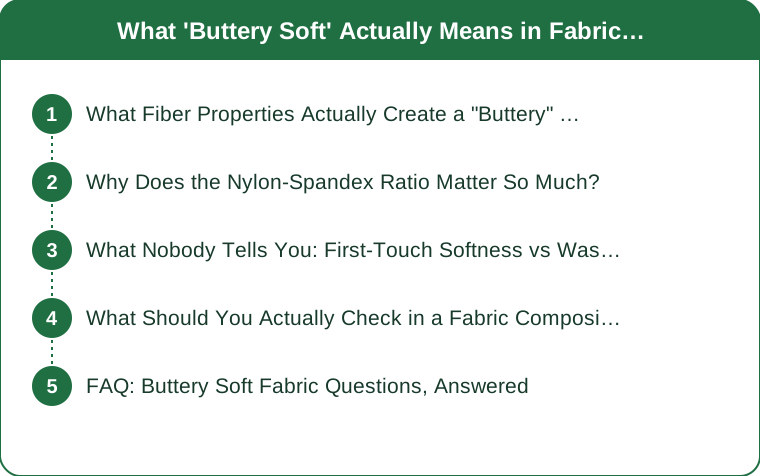
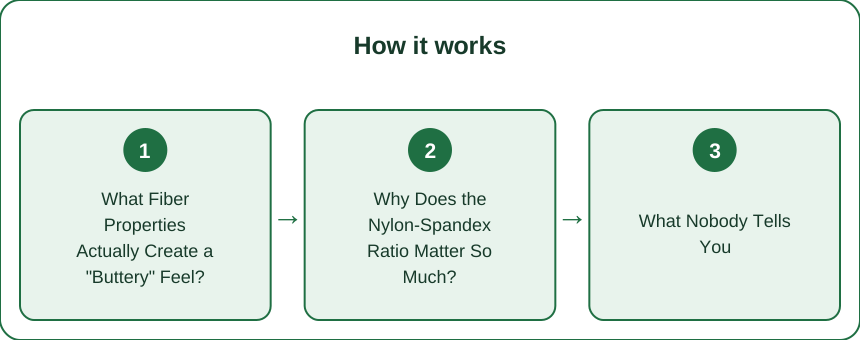
What Fiber Properties Actually Create a “Buttery” Feel?
The softness you feel when you touch fabric comes down to a measurable property: fiber diameter, usually expressed in microns (a unit of thickness) or denier (weight per length of fiber) in textile listings.
Finer fibers feel softer because they bend more easily against your skin and have less surface rigidity — think of the difference between a fine human hair and a coarse wire; the mechanism is the same principle applied to synthetic fibers. Microfiber nylon, commonly used in premium activewear, is defined as fiber finer than one denier per filament, which is significantly thinner than standard nylon used in basic activewear. Fabric using true microfiber nylon has a genuinely different, smoother hand-feel than fabric using standard-denier nylon, and this shows up as a spec difference, not just a marketing claim.
The second major factor is knit structure, specifically whether the fabric is brushed (also called “napped”). Brushing is a mechanical finishing process where the fabric surface is lightly abraded to raise short fiber ends, creating a fuzzy, plush surface texture — this is what gives fleece-backed leggings or “cloud” fabrics their velvety feel. Unbrushed fabric with the same fiber content will feel noticeably smoother and less plush, even if the underlying yarn is identical quality.
Together, fine fiber diameter plus a brushed finish is what produces the specific “buttery” sensation — smooth against the skin but with a slight plush give, rather than a slick or papery feel.
Why Does the Nylon-Spandex Ratio Matter So Much?
Most activewear fabric is a blend, and the ratio between fibers changes both the feel and the function significantly.
Nylon provides the smooth surface and durability, while spandex (also called elastane) provides stretch and recovery — the ability to return to original shape after stretching. A common range for premium activewear is 75-85% nylon to 15-25% spandex, though this varies by garment type.
Here’s the part that affects softness specifically: too little spandex (under about 10%) makes fabric feel flatter and less cushioned against the skin, because there’s less elastic give to create that slight compression-and-release sensation against your body. Too much spandex (above roughly 25-30%) can actually make fabric feel tackier or grippier rather than smoother, since spandex fibers have a different surface texture than nylon and a higher ratio shifts the fabric’s overall hand-feel toward that grippier quality — which is sometimes desirable for compression leggings but works against a “buttery” glide feel.
The sweet spot for that smooth, buttery sensation tends to sit around 78-82% nylon to 18-22% spandex in most premium activewear lines, balancing enough elasticity for stretch and recovery without the spandex fiber’s texture dominating the surface feel. This is also why cotton-spandex blends, common in casual loungewear, rarely achieve the same “buttery” quality — cotton fiber has a fundamentally different (and generally coarser) surface texture than nylon, regardless of the blend ratio.

What Nobody Tells You: First-Touch Softness vs Wash-Durable Softness
This is the gap where most “buttery soft” disappointment happens, and it’s rarely explained on product pages.
Fabric can be chemically treated to feel soft immediately off the shelf, using silicone-based softening agents applied during finishing. This creates a genuinely pleasant first-touch experience — but these coatings are a surface treatment, not a structural fiber property, and they gradually wash away over repeated laundering. If a legging feels dramatically softer in the store than it does after a month of regular wear and washing, this is very likely why: you were feeling the finishing treatment, not the underlying fiber quality.
Fabric with genuine fiber-level softness (fine microfiber nylon, properly brushed knit, balanced blend ratio) tends to feel consistent — sometimes even better after a few washes, once any factory sizing or stiffening agents used in manufacturing have washed out and the true hand-feel of the fiber comes through.
A simple test if you’re unsure: compare how a garment feels the moment you unpackage it versus how it feels after just one wash and dry cycle (with a garment you already own, or a return-eligible new purchase). A significant drop-off in softness after a single wash is a strong signal you’re dealing with a surface treatment rather than genuine fiber quality. A fabric that maintains its feel — or improves slightly — is more likely built on the underlying properties described above rather than a temporary coating.
This doesn’t mean treated fabric is a scam — first-touch softness is a real and valid part of the shopping experience — but it does mean “buttery soft” on a label tells you almost nothing about whether that feeling will still be there in month three.
What Should You Actually Check in a Fabric Composition Listing?
Most product pages bury the useful information below the marketing copy. Here’s what to look for specifically.
Fiber content percentages. Look for the nylon-to-spandex (or polyester-to-spandex) ratio. As covered above, roughly 78-82% nylon to 18-22% spandex tends to correlate with that smooth, cushioned feel most people mean by “buttery.”
The word “microfiber” or a denier specification. If the listing mentions microfiber nylon or gives a denier number, lower denier per filament generally means finer, softer fiber. Brands that invest in genuinely fine fiber tend to mention it specifically because it’s a real cost and quality differentiator, not just a phrase.
Brushed, napped, or “peached” finish terminology. These terms indicate the mechanical brushing process described earlier. “Peached” specifically refers to a finish that mimics the fuzzy texture of a peach’s skin — a strong indicator of a genuinely plush surface treatment built into the fabric structure, not just a marketing adjective.
Fabric weight (GSM — grams per square meter). Heavier fabrics (usually 240+ GSM in leggings) tend to have a more substantial, cushioned feel, while lighter fabrics (180 GSM and under) tend to feel thinner and cooler, even with the same fiber blend. Neither is objectively better, but weight affects how “buttery” a fabric feels in the hand.
Cotton content. If cotton appears anywhere in the blend for a “buttery soft” activewear claim, be skeptical — cotton’s coarser fiber structure works against the smooth, plush hand-feel the term usually describes, and cotton blends are more associated with a soft-but-matte loungewear feel than an activewear “buttery” glide.
FAQ: Buttery Soft Fabric Questions, Answered
Is “buttery soft” a regulated or standardized fabric term?
No — it’s a marketing descriptor with no industry standard definition. The only reliable way to verify the claim is checking the actual fiber composition, denier, and finish type in the product’s fabric listing.
Does buttery soft fabric mean it’s less durable?
Not necessarily. Fine microfiber and properly brushed knits can be highly durable if well-constructed — softness and durability are separate properties. What reduces durability is pilling from low-quality fiber or excessive surface treatment reliance instead of genuine fiber quality.
Why does my “buttery soft” legging pill after a few wears?
Pilling usually happens when short, loose fiber ends (common in lower-quality brushed finishes or blends with too little spandex to hold fiber structure) rub against themselves or other surfaces and tangle into small balls. Higher-quality brushed nylon-spandex blends resist this better than cheaper polyester-heavy alternatives.
Is polyester-spandex as soft as nylon-spandex?
Generally no — nylon has a naturally smoother, silkier fiber surface than polyester at comparable price points, which is part of why nylon-spandex blends dominate the premium “buttery soft” activewear category specifically.
TL;DR:
- “Buttery soft” comes from fine-diameter (low micron/denier) fibers combined with a brushed or napped knit finish
- The nylon-spandex ratio matters — roughly 78-82% nylon to 18-22% spandex tends to produce the smoothest, most cushioned feel
- First-touch softness can come from a temporary silicone finishing treatment that washes out, separate from genuine fiber-level softness
- Check the fabric listing for microfiber/denier specs, brushed or peached finish terms, and GSM weight rather than trusting the phrase alone
The softest-feeling pair in the store isn’t always the one that stays that way — the composition listing tells you which kind you’re buying.
See It in Motion
Seen here: High Waist Yoga Leggings with Side Pockets — shop it on bubblelime.com
Keep Reading
This article is for general informational and styling purposes only. Fit, sizing, and product availability may vary.