Does Fabric Softener Actually Ruin Buttery Soft Leggings?
Quick Answer: Yes. Fabric softener coats fibers in a waxy cationic film that clogs the gaps in stretch knits. On cotton towels that feels plush. On a nylon-spandex legging it seals in odor, blocks moisture wicking, and gradually stiffens the exact hand-feel you paid for. Skip it entirely - a half cup of distilled white vinegar in the rinse does the softening job with none of the buildup.
The irony is thick. The bottle says softener, the fabric gets harder, and most people blame the leggings.

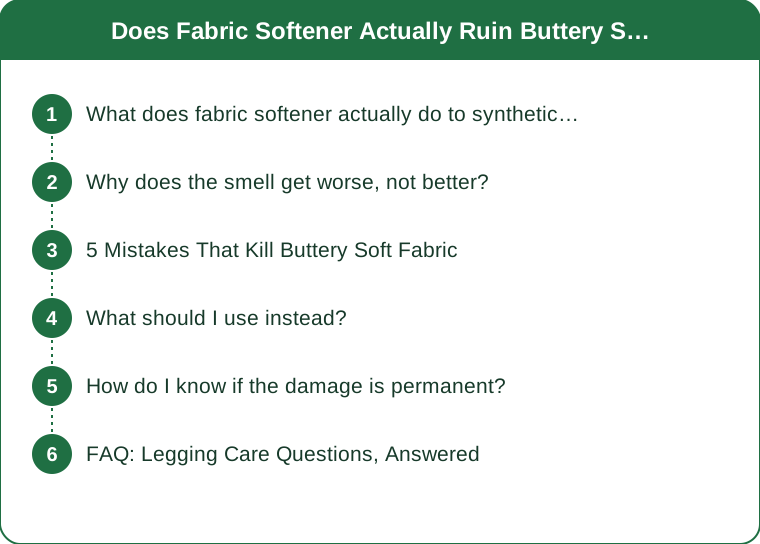
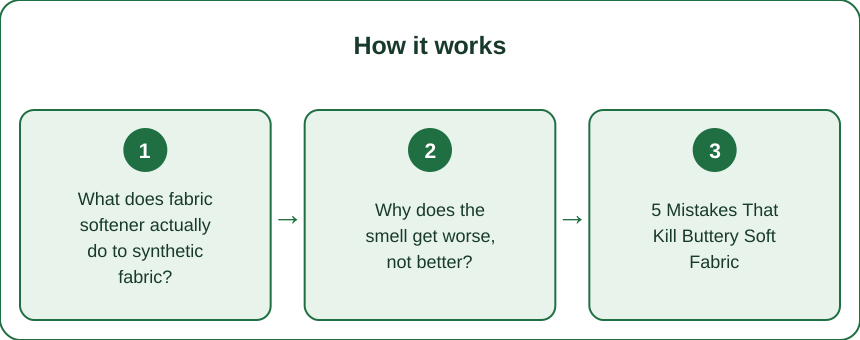
What does fabric softener actually do to synthetic fabric?
Softener works by depositing positively charged molecules - think of a very thin layer of conditioning wax - onto fiber surfaces. On cotton, those fibers are absorbent and fluffy, so the coating makes them lie flat and feel smooth.
Synthetic performance fabric is engineered in the opposite direction. Buttery soft leggings get their hand-feel from a brushed surface and a tight knit structure, not from fiber absorbency. Coat that structure and you flatten the nap, fill the interstitial spaces, and reduce the fabric’s ability to move air and moisture.
After about 10 to 15 washes with softener, most people describe the same three symptoms: a slightly slick or greasy feel, a lingering gym smell that survives washing, and less snap back at the knee.
Why does the smell get worse, not better?
This one surprises people. Odor in activewear comes from bacteria feeding on sweat residue trapped in the fabric. Softener film is exactly the thing that traps it.
Detergent needs to reach the fiber to lift residue out. When a waxy layer sits between the two, wash water skims over the top and the residue stays. Then the softener’s fragrance sits on top of it, which is why the leggings smell fine in the drawer and smell terrible ten minutes into a workout when they warm up.
If you have a pair that smells the moment you start sweating, softener buildup is the first thing to suspect - ahead of the detergent or the machine.
5 Mistakes That Kill Buttery Soft Fabric
- Fabric softener or dryer sheets. Same chemistry, same coating, dryer sheets just deliver it with heat.
- Hot water. Spandex begins losing elastic recovery well below boiling. Cold wash is not a suggestion - it is the single biggest lifespan factor.
- Overdosing detergent. More soap than the machine can rinse leaves its own residue. Use about half the labeled amount for a synthetic load.
- The dryer on high. Heat is what actually breaks spandex. Air dry flat, or tumble on no-heat for 10 minutes and hang.
- Washing with towels or denim. Abrasion from heavy cotton is what pills the inner thigh. Wash activewear with activewear.
The third one surprises even people who are careful about everything else.

What should I use instead?
Distilled white vinegar, half a cup, in the rinse cycle. It is mildly acidic, which strips existing cationic buildup and neutralizes odor compounds at the same time. It does not leave a smell once dry - the acetic acid evaporates.
Run a vinegar-only rinse on your current pairs first, with no detergent, to reset them. One cycle will not undo two years of buildup, but two or three usually get most of the hand-feel back.
After that, the routine is short: cold water, half-dose of a detergent without added conditioners, inside out, vinegar in the rinse, air dry. That is it. No sports-specific wash required, though enzyme-based sport detergents do help if you train daily.
How do I know if the damage is permanent?
Do the stretch test. Pull the fabric across the thigh to about 150 percent of its resting width, hold for 3 seconds, and let go. Healthy spandex snaps back with no visible slack. If a wavy or loose line stays, the elastane has taken permanent set and no wash routine reverses that.
Coating, though, is reversible. If the fabric still recovers but feels slick and holds smell, that is buildup and vinegar will fix it.
Rough rule: leggings washed correctly hold their hand-feel for 60 to 100 wears. With softener and hot drying, people commonly report noticeable decline by wear 25.
FAQ: Legging Care Questions, Answered
Are dryer sheets safer than liquid softener?
No. They deposit the same class of coating and add heat, which is separately hard on spandex. Wool dryer balls with no heat are the safe substitute if you want less static.
Will vinegar damage the elastic?
Not at half a cup diluted in a full rinse. Undiluted vinegar poured directly on fabric can weaken elastane over time, so always add it to the dispenser or the filled drum, never straight onto the garment.
What about the buttery softness that feels gone after one wash?
That is usually a finishing agent from manufacturing washing out, not damage. The true fabric hand-feel shows up around wash two or three and should stay stable from there.
TL;DR:
- Fabric softener coats synthetic knits, flattening the brushed nap that creates the buttery feel.
- The coating traps sweat residue, which is why softener-washed leggings smell worse when they warm up.
- Swap it for half a cup of distilled white vinegar in the rinse - it strips buildup and kills odor.
- Cold water, half-dose detergent, inside out, air dry. Heat is what actually destroys spandex.
- Buildup is reversible. Permanent stretch-out, tested by a snap-back check, is not.
If one pair in your drawer has gone slick and smelly while the rest are fine, it is almost never a manufacturing flaw. Run it through two vinegar rinses before you write it off.
See It in Motion
Seen here: High Waist Yoga Leggings with Inner Pocket — shop it on bubblelime.com
Keep Reading
This article is for general informational and styling purposes only. Fit, sizing, and product availability may vary.