Do Buttery Soft Leggings Still Work When the Weather Cools?
Quick Answer: Buttery soft leggings are usually a brushed polyester-spandex blend, which is soft but only mildly insulating and slow to dry. They work well down to roughly 55-60F for walking and indoor training, and they underperform below that or in wet conditions. For cooler weather, look for the same hand-feel in a heavier weight, a fleece-lined version, or layer them under a looser trouser.
The pair you lived in through July suddenly feels thin on a 58-degree morning. Nothing’s changed about the leggings - what changed is what you’re asking them to do.
Here’s what buttery soft actually is in fabric terms, and where the boundary sits.
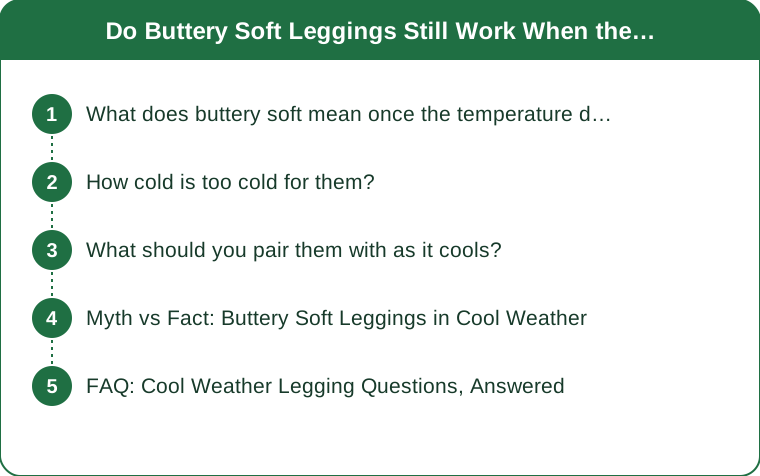
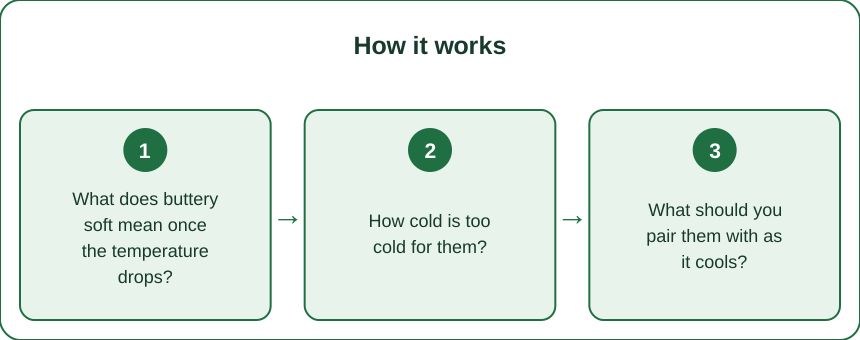
What does buttery soft mean once the temperature drops?
The softness comes from a mechanical finish, not from the fibre itself.
The construction: most buttery soft leggings are polyester or nylon with 10-25% spandex, brushed on the inside face. Brushing raises tiny fibre ends that create a peached, velvety surface. It’s a surface treatment, and it’s why the outside can feel smooth while the inside feels plush.
Why that matters in cool weather: the raised nap traps a thin layer of air, which gives a small amount of insulation - real but modest. It’s nothing like fleece lining, which uses a much deeper pile. So the warmth boost over an unbrushed legging is genuine and slight.
The moisture problem is the bigger one. Brushed synthetics hold moisture in that raised nap. In summer that’s mildly annoying; in cool weather a damp layer against skin actively pulls heat away. This is why the same pair that felt fine in August feels genuinely cold after a sweaty autumn walk.
Weight is the number to look at, and almost nobody does. Fabric weight in gsm tells you far more than the marketing word:
- Under 200gsm - summer weight, will feel thin below 60F
- 220-280gsm - the everyday range most buttery soft leggings sit in
- 300gsm+ - genuinely warm, often described as brushed or thermal
If the listing doesn’t state gsm, the squeeze test approximates it: stretch a section and hold it to the light. Seeing skin clearly through the stretched fabric means it’s on the light side and will read as cool.
How cold is too cold for them?
Rough thresholds, assuming dry conditions and moderate activity.
Above 65F - ideal. This is what the fabric was designed for.
55-65F - fine for walking, errands, indoor studio work, and anything where you’ll warm up in the first ten minutes. Most people find this range comfortable once they’re moving, and cold for the first block.
45-55F - workable with a layer. A long top that covers the hip, or a light shell over the top for wind, closes most of the gap. Standing around at this temperature in them alone is unpleasant.
Below 45F - the wrong tool. Wind cuts straight through a thin knit, and the brushed inside offers no wind resistance at all. This is fleece-lined or double-layer territory.
Wind changes everything. A thin knit legging in a 15mph wind at 55F feels roughly like still air at 40F. If your route is exposed, size the choice for wind, not the thermometer reading.
Wet is worse than cold. Once brushed polyester is damp it stops insulating almost entirely and takes a long time to dry. For rain, choose a smooth-faced technical fabric instead, which sheds water and dries far faster even though it feels less nice against the skin.
The honest boundary for most people: buttery soft leggings stay in rotation into autumn for indoor training and dry walks, and they stop being the right choice for outdoor running once mornings sit in the forties.

What should you pair them with as it cools?
The layering choices that extend the season, in order of usefulness.
A hip-length or longer top. The single most effective change. Covering the hip and lower back eliminates the cold patch that makes thin leggings feel colder than they are - the small of the back is where most people feel it first.
Crew socks instead of no-show. Closing the ankle gap matters more than the length of the legging. A cropped legging with a crew sock is warmer than a full-length with a no-show, which surprises people.
A wind layer, not a warm layer. For outdoors, a thin shell over the top beats a thicker legging. Wind resistance does more for perceived warmth than insulation does in the 45-60F band.
A looser trouser over the top. Buttery soft leggings work well as a base layer under a wide-leg or a joggers pair - the slick outer face means they don’t bunch. This is the easiest way to keep wearing the pair you like well past their solo season.
What doesn’t help: doubling up two thin leggings. It compresses both layers, kills the air gap that provides the insulation, and restricts circulation - colder, not warmer.
And a footwear note: as it cools, a longer or full-length pair with an ankle boot works where a cropped pair with trainers stops looking seasonally right. Length reads as much as fabric does in whether an outfit looks like it belongs to the month.
Myth vs Fact: Buttery Soft Leggings in Cool Weather
Myth: Softer means warmer. Fact: Softness comes from surface brushing; warmth comes from thickness and trapped air. A thin brushed legging can feel plush and provide very little insulation. Weight tells you about warmth; hand-feel doesn’t.
Myth: Buttery soft and fleece-lined are the same thing. Fact: Different constructions entirely. Fleece lining is a deep pile that adds significant insulation and bulk; buttery soft is a light surface nap. A fleece-lined pair is often noticeably less soft to the touch and much warmer.
Myth: You should size down as it cools so they fit closer. Fact: Compressing the fabric against skin removes the air layer doing the insulating. Correct fit is warmer than tight fit, and tight fit also accelerates pilling at the thigh.
Myth: They pill because they’re low quality. Fact: Pilling is inherent to brushed fabrics - raised fibre ends are what makes them soft, and raised fibre ends tangle. Better construction slows it and nothing eliminates it. Washing inside out on cold and skipping the dryer roughly doubles the useful life.
Myth: If they’re cold, you need thicker leggings. Fact: Often you need a longer top and better socks. Perceived cold in thin leggings is usually about the exposed lower back and ankles rather than the thigh, and those are cheaper problems to solve.
FAQ: Cool Weather Legging Questions, Answered
Can I wear buttery soft leggings for an autumn run?
Down to about 50F in still air, yes. Below that or in wind, a smooth technical fabric is better - it blocks more wind, holds less sweat, and dries far faster when you stop moving.
Why do they feel colder after a workout than before?
The brushed nap holds sweat, and damp fabric against skin conducts heat away several times faster than dry fabric. Change out of them promptly after outdoor training rather than sitting in them.
Are fleece-lined ones worth buying separately?
If you train outdoors through winter, yes - they’re a genuinely different garment rather than a warmer version of the same one. If you’re mostly indoors, layering the pair you own is more useful than buying another.
How do I stop the pilling between the thighs?
Wash inside out, cold, in a bag, without fabric softener, and air dry. Friction causes it, so a slightly looser fit through the thigh helps too. A fabric shaver restores the look but thins the fabric, so use it sparingly.
Does washing them less make them last longer?
No - sweat salt degrades elastane, so leaving them unwashed is worse. Wash after each sweaty wear on cold and gentle; that’s kinder than letting salt sit in the fibres for a week.
TL;DR:
- Buttery soft is a brushed surface finish, not a warmth rating - fabric weight in gsm tells you about warmth
- Comfortable down to roughly 55-60F for moving activity; below that you need layers or a different fabric
- Wind matters more than temperature, and damp brushed fabric loses almost all its insulation
- A hip-length top and crew socks do more for warmth than a thicker legging
- Never double up two thin pairs - it compresses the air layer and makes things colder
- Pilling is inherent to the construction; cold wash inside out and no dryer roughly doubles their life
They don’t stop working in September. They just stop being the only thing you need.
See It in Motion
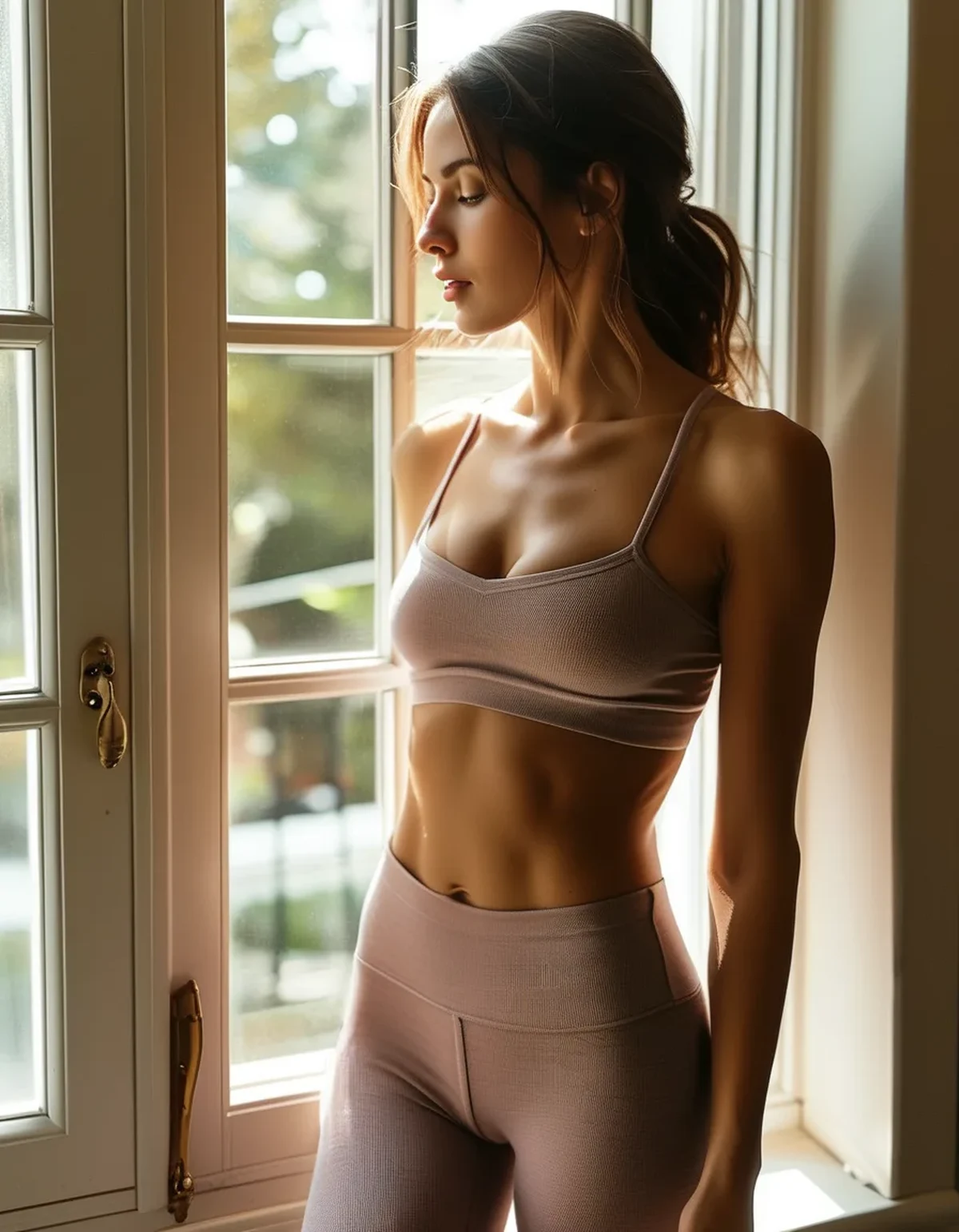
Seen here: Super High Waist Embossed Yoga Leggings with Inner Pocket — shop it on bubblelime.com
Keep Reading
This article is for general informational and styling purposes only. Fit, sizing, and product availability may vary.