Do Buttery Soft Leggings Work in Humid Heat, or Do They Betray You?
Quick Answer: Buttery soft leggings are usually brushed polyester or nylon blends, and the brushing that creates the softness also traps air and holds moisture against your skin. That is excellent in cool weather and works against you in humid heat, where they feel clammy and take a long time to dry. For hot humid conditions, choose a thinner unbrushed knit or a fabric with a wicking finish, and save the buttery ones for autumn.
The leggings that felt like a hug in the shop feel like cling film in August.
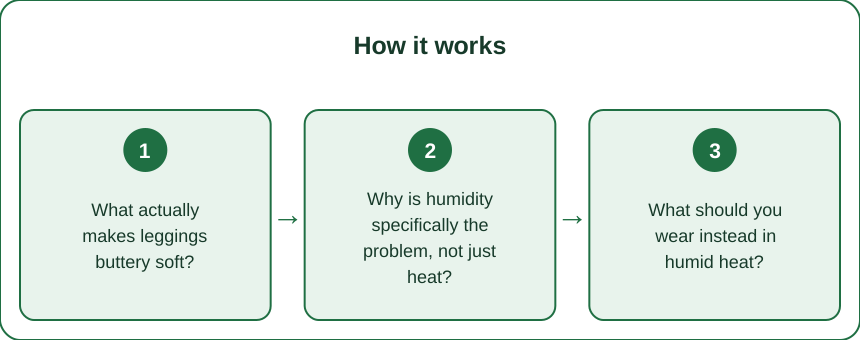
What actually makes leggings buttery soft?
The feel comes from a mechanical finishing process, not from the fibre itself, and that is the whole key to understanding the trade-off.
Most buttery soft leggings are brushed knits. After the fabric is knitted, it passes through rollers with fine wires that raise a layer of microscopic fibre ends on one or both surfaces. That raised nap is what your hand reads as softness - you are touching fibre ends rather than the flat surface of the yarn.
The fibre is typically polyester or nylon blended with elastane. Nylon-based versions tend to feel smoother and more expensive; polyester versions are cheaper and often thicker.
Peached and sueded finishes are variations on the same idea with slightly different roller treatments.
Here is the physical consequence: a raised nap creates a layer of trapped air against the skin. Trapped air is insulation. It is the same principle as fleece, just at a much smaller scale.
And the nap holds moisture. The increased surface area that makes it feel soft also gives sweat more places to sit. Brushed fabrics generally dry more slowly than smooth ones of the same fibre and weight, which is precisely the wrong property in humid conditions.
Why is humidity specifically the problem, not just heat?
Because your cooling system depends on evaporation, and humidity is the variable that governs whether evaporation happens.
Sweat cools you by evaporating, not by being produced. Sweat that sits on your skin has done nothing.
In dry heat, even a moderately breathable fabric works - the surrounding air has enormous capacity to absorb moisture, so evaporation proceeds and you get cooled.
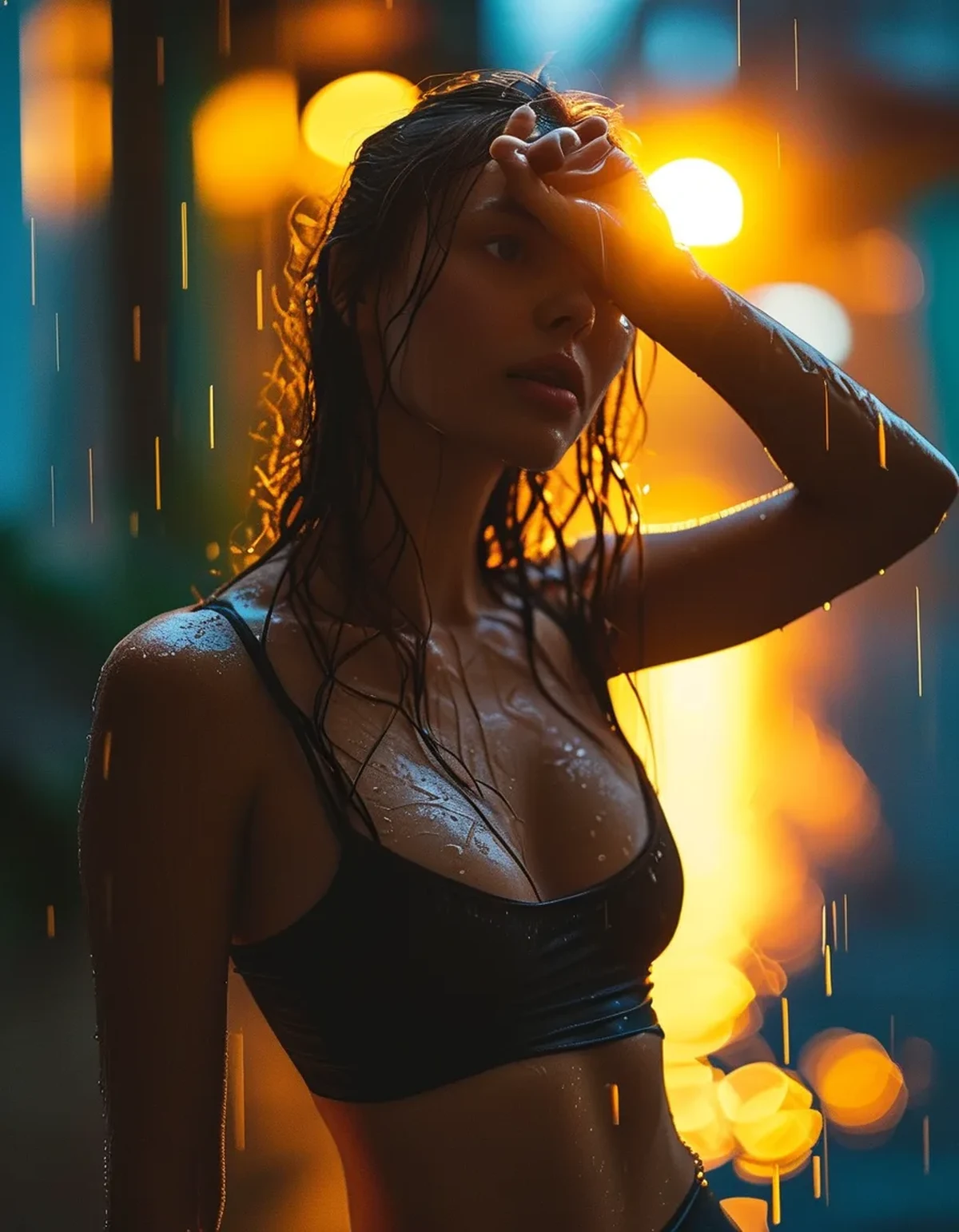
In humid heat, the air is already close to saturated. Evaporation slows dramatically for everyone regardless of clothing. Add a brushed layer that holds moisture against the skin and slows airflow, and you have removed most of what remains.
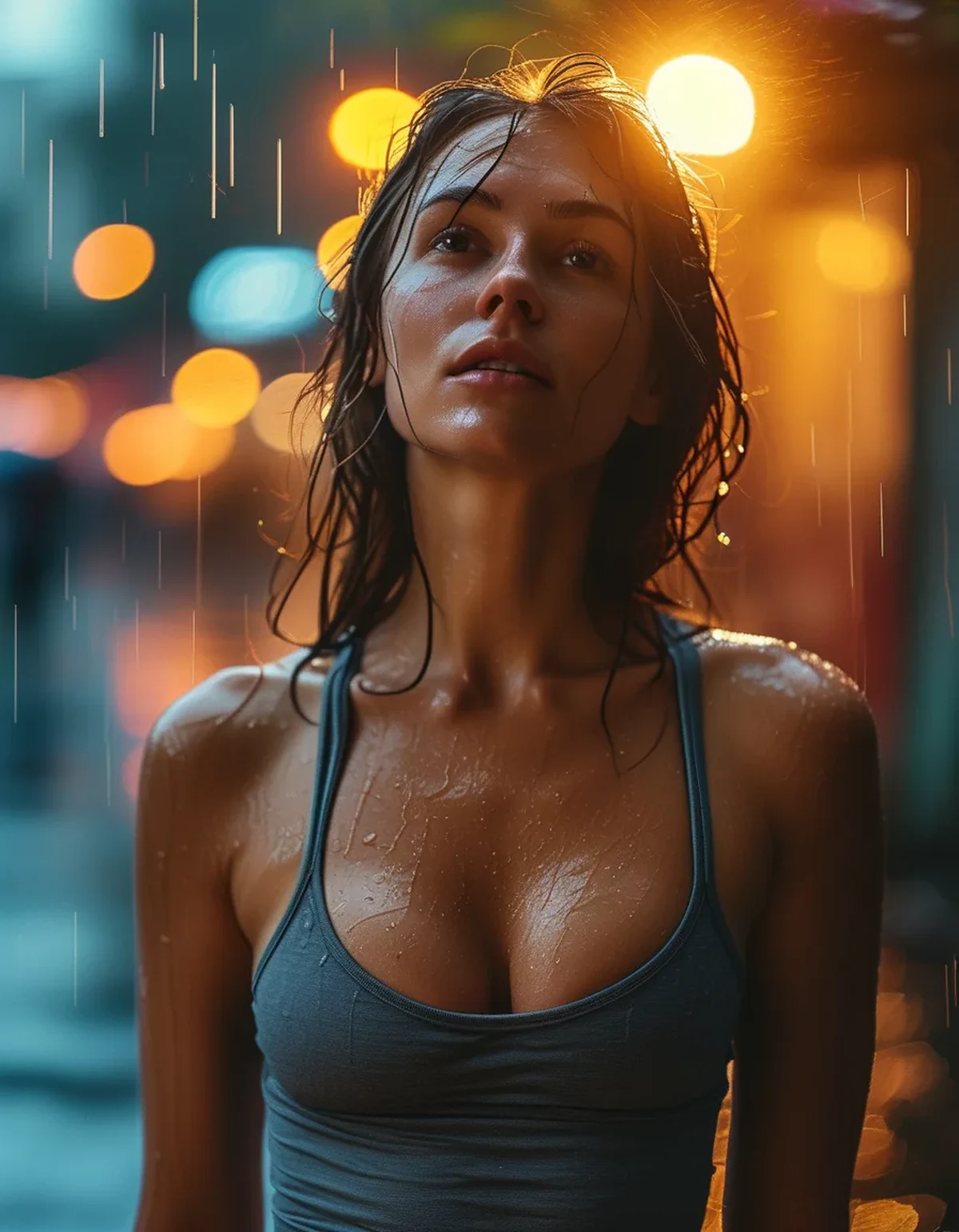
The subjective result is the clammy feeling - fabric that is damp, warm, staying in contact with your skin, and not drying. It is not that the leggings are making you sweat more; they are preventing the sweat you produce from doing its job.
Two secondary effects follow:
- Chafing risk rises, because damp fabric against damp skin has a higher friction coefficient than either dry fabric or freely sliding wet fabric.
- Odour develops faster, because polyester holds onto the compounds bacteria produce and warm damp conditions accelerate the process.
What should you wear instead in humid heat?
Specific alternatives, in order of how much difference they make.
1. A thinner, unbrushed knit. Same fibre family, no nap. You lose the hand-feel and gain a fabric that dries substantially faster. This is the single most useful swap.
2. Anything with a genuine wicking finish. Wicking is a chemical or structural treatment that pulls moisture along fibres and spreads it over a larger surface area to evaporate faster. It only works if the moisture can then evaporate, so this helps in moderate humidity and does less in extreme humidity.
3. Mesh or perforated panels behind the knee and along the hamstring. Airflow at the points where fabric contacts skin most closely. Small area, disproportionate effect.
4. Shorter lengths. Capri, 7/8, or bike shorts. Less fabric is the most reliable heat strategy there is, and it needs no technology at all.
5. Looser fits. Air movement between fabric and skin is what carries moisture away. A compressive fit in humid heat is working against you even in a good fabric.
On natural fibres: cotton is comfortable initially and then holds water and stays wet - generally worse than technical fabric for sustained sweat. Merino performs surprisingly well in heat and resists odour, but is uncommon in legging form and expensive.
On colour: lighter colours reflect more radiant heat outdoors. Also worth knowing - lighter colours show sweat more visibly, which is why so many people default to black in summer and then wonder why they are hot.
5 Mistakes People Make With Soft Leggings in Summer
Mistake 1: Assuming thin means cool. Thickness and breathability are different properties. A thin brushed fabric can breathe worse than a thicker smooth one, because the nap governs airflow more than the weight does. Check the surface, not the scale.
Mistake 2: Buying by hand-feel in the shop. Air-conditioned retail is the worst possible test environment for hot-weather fabric. Everything feels good at 70 degrees and low humidity. The relevant question is how it behaves damp.
Mistake 3: Sizing down for a smoother look. Tighter fit means less airflow and more skin contact. In humid heat, the compressive fit is exactly what makes brushed fabric feel worst.
Mistake 4: Washing them hot or drying them in the machine. Heat destroys the elastane and mats the nap. Matted nap is worse than either a proper nap or a smooth surface - you lose the softness and keep the poor breathability. Cold wash, inside out, hang dry.
Mistake 5: Wearing them for hot yoga or high-sweat sessions. This is the specific worst case: maximum sweat, maximum humidity, maximum skin contact, no airflow. The fabric will be saturated and will stay saturated, and this is also where sheerness problems appear, because wet brushed fabric loses opacity.
So when are buttery soft leggings actually the right choice?
They are genuinely excellent, in the right conditions, and it is worth being clear about that rather than writing off the category.
Where they win:
- Cool and cold weather. The trapped air that hurts in August is insulation in November. Brushed leggings are a legitimately great cold-weather layer.
- Low-sweat activity. Walking, errands, travel, working from home, stretching, light strength work.
- Air-conditioned environments. Offices, planes, anywhere the ambient humidity is controlled.
- Comfort-first days. The hand-feel is the point and it is a real benefit.
- Autumn transition, which is about three weeks away. This is the season these were made for.
Where they lose: hot humid outdoor conditions, running in summer, hot yoga, and any sustained high-sweat session.
The sensible conclusion is a two-fabric wardrobe rather than a single perfect legging. A thin smooth pair for hot and sweaty, a brushed pair for cool and comfortable. Trying to find one fabric that does both means accepting a compromise on the days you notice most.
And a practical note on timing: if you like buttery soft leggings, the end of summer is when they go on sale, and they are about to become seasonally correct. Buying the wrong-season fabric at the right moment is the whole point of end-of-season shopping.
FAQ: Buttery Soft Legging Questions, Answered
Why do my soft leggings smell after one wear?
Polyester holds odour compounds more than natural fibres, and brushed surfaces have more area for them to sit on. Wash promptly rather than leaving them damp in a bag, skip fabric softener, and consider an occasional vinegar soak.
Does the softness wash out?
The nap flattens over time, particularly with heat and agitation. Cold wash, inside out, no dryer, no softener will slow it considerably but not stop it entirely.
Are buttery soft leggings sheer when you bend over?
It depends on the weight and how much they stretch. Any legging is more sheer when stretched, and brushed fabrics lose opacity when wet - which is why the squat test matters and why hot sweaty sessions are the worst case.
Is nylon or polyester better for this?
Nylon versions generally feel smoother, are more durable, and hold shape better. Polyester is cheaper and often thicker. For breathability in heat, neither brushed version is ideal.
What is the single best hot-weather legging feature?
Less fabric, then airflow. A shorter length in a thin unbrushed knit beats every technical finish applied to a brushed one.
TL;DR:
- The brushing that makes leggings buttery soft traps air and holds moisture - insulation, not ventilation
- In humid heat that stops sweat evaporating, which is the entire cooling mechanism
- Swap to a thin unbrushed knit, add mesh panels, or just wear a shorter length
- Never tumble dry them and skip fabric softener - both wreck the nap and the elastane
- They are genuinely great from October onward, which is roughly six weeks away
The fabric is not bad. It is seasonal, and August is not its season.
See It in Motion
Seen here: Super High Waist Embossed Yoga Leggings with Inner Pocket — shop it on bubblelime.com
Keep Reading
This article is for general informational and styling purposes only. Fit, sizing, and product availability may vary.